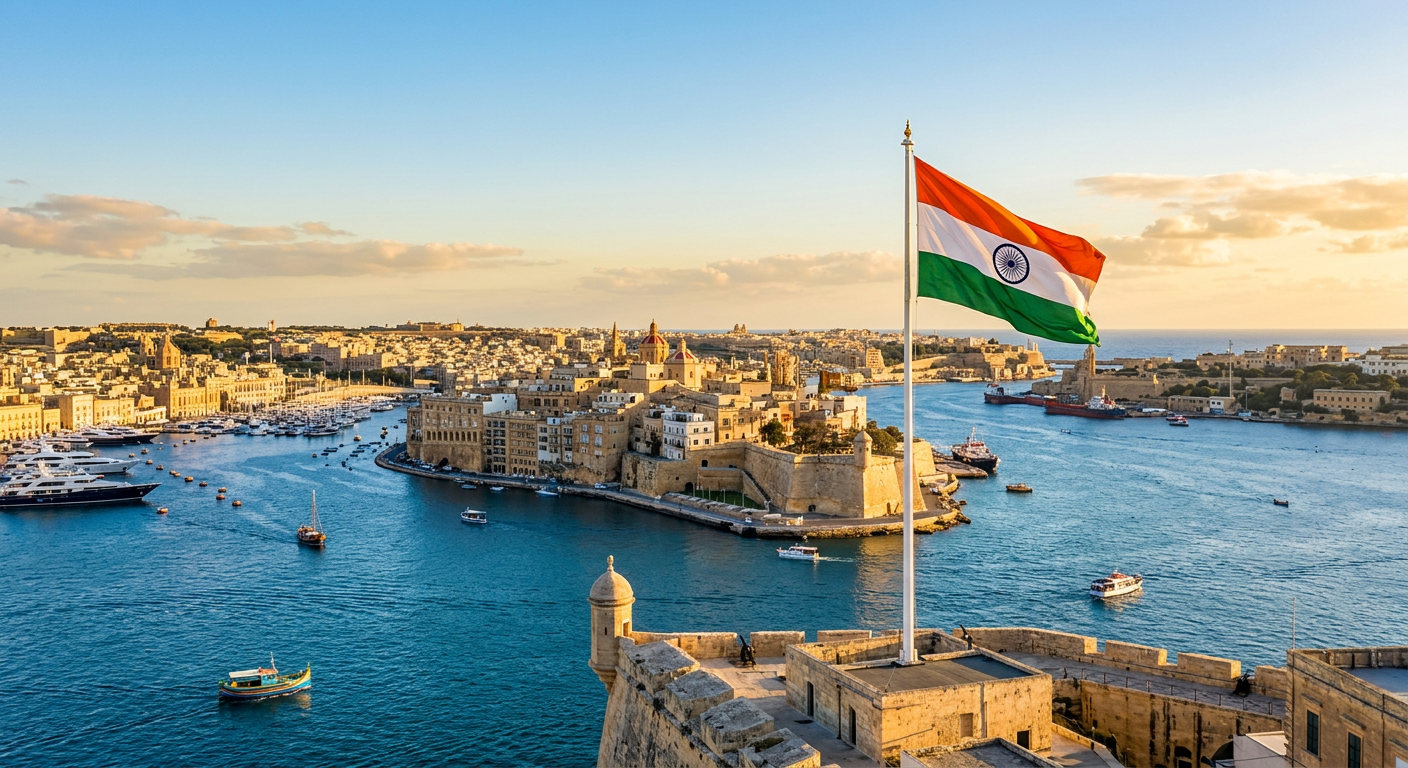
Your Complete Guide to Moving to Malta: Costs, Visas, Tax & What to Expect

- Introduction
- Key Legal Points
- Who This Guide Is For
- Why Move to Malta in 2026? (Benefits, Lifestyle & EU Residency Explained)
- Cost of Living in Malta in 2026 (Rent, Salaries & Monthly Expenses)
- Malta Residence Options in 2026 (EU, Non-EU & Permanent Residence Explained)
- How to Get Maltese Citizenship (Naturalisation & Citizenship by Merit)
- Malta Tax Residency Rules (Non-Domiciled Status & Remittance Basis Explained)
- Malta Tax Incentives for Expats (GRP, TRP, MRP & Other Schemes)
- Best Places to Live in Malta (Sliema, St Julian’s, Valletta & Gozo Compared)
- Buying Property in Malta (AIP Permit, Legal Process & Foreign Buyer Rules)
- Renting in Malta (Prices, Contracts & What Expats Should Know)
- Healthcare in Malta for Expats
- Schools in Malta (International, Private & State Education Options)
- Living in Malta (Transport, Banking, Language & Daily Life)
- Challenges of Moving to Malta (Delays, Banking, Housing & Tax Issues)
- Conclusion
- Frequently Asked Questions About Moving to Malta
- RELATED ARTICLES
Introduction
Moving to Malta in 2026 is increasingly driven by more than lifestyle appeal. For many individuals and families, relocation now involves EU mobility, residence planning, tax structuring, and long-term stability within a regulated European jurisdiction.
This guide explains everything you need to know about moving to Malta, including:
- Malta residence and visa options
- Cost of living and housing in 2026
- Tax residency rules and expat tax programmes
- Best places to live in Malta
- Healthcare, schooling, and daily life
Whether you are relocating for work, retirement, or family reasons, understanding Malta’s legal and practical requirements is essential before making the move.
Key Legal Points
- Malta is an EU Member State: EU nationals benefit from free movement; non-EU nationals require structured residence permits
- Residence status does not automatically equal tax residence
- Foreign property buyers may require an Acquisition of Immovable Property (AIP) permit
- Access to healthcare and education depends on residence status and insurance
- Relocation should integrate immigration, tax, property, and estate planning
Who This Guide Is For
This guide is designed for:
- Professionals relocating within or to the EU
- Remote workers and digital nomads
- Retirees seeking EU residency and tax planning options
- Entrepreneurs and investors
- Families relocating to Malta long-term
Why Move to Malta in 2026? (Benefits, Lifestyle & EU Residency Explained)
Malta continues to attract international residents due to its combination of EU access, legal stability, and practical lifestyle advantages.
Key advantages include:
- EU membership and mobility: Malta offers full access to the European Union framework and rights for eligible residents.
- English-speaking environment: English is widely used in government, education, business, and legal systems.
- Stable legal and tax framework: Malta operates within EU and OECD-compliant systems while maintaining competitive tax regimes.
- Safety and quality of life: Malta is widely regarded as a safe, stable country with strong public infrastructure.
In practice:
Many professionals relocate to Malta as a EU base for remote work or international business activity, combining lifestyle flexibility with regulatory certainty.
Cost of Living in Malta in 2026 (Rent, Salaries & Monthly Expenses)
Understanding living costs is essential before relocating.
Average monthly budgets:
- Single person: €1,400 – €2,200
- Couple: €2,000 – €3,000
- Family: €3,000 – €4,500+
Typical expenses:
- Rent (1-bedroom apartment): €800 – €1,500+
- Utilities: €80 – €150
- Groceries: €250 – €500 per person
- Private health insurance: €300 – €1,000 per year
Important notes:
- Central and coastal areas (Sliema, St. Julian’s) are more expensive
- Rental demand is high in popular expat areas
- Costs are lower than major EU capitals but higher than many Southern European regions
Malta Residence Options in 2026 (EU, Non-EU & Permanent Residence Explained)
Relocating to Malta starts with choosing the correct legal residence route.
Main options include:
Malta Permanent Residence Programme (MPRP)
- Designed for long-term residence planning
- Commonly used by non-EU nationals
- Does not require immediate relocation
EU Free Movement / Ordinary Residence
- For EU/EEA/Swiss nationals
- Based on employment, self-sufficiency, or study
Employment-Based Residence
- Includes Highly Qualified Persons schemes
- For professionals and executives working in Malta
Self-Sufficiency Routes
- For individuals with independent financial means
- Requires proof of stable income and health coverage
Key insight:
Choosing the wrong route can affect your tax position, family eligibility, and long-term residence rights.
How to Get Maltese Citizenship (Naturalisation & Citizenship by Merit)
Citizenship in Malta is not automatic.
Main pathways:
- Naturalisation: Granted after lawful residence over time and integration
- Citizenship by Merit: Granted in exceptional cases for contribution to Malta
Important considerations:
- Requires long-term residence and compliance
- Does not automatically determine tax residency
- Should be planned as part of a long-term strategy
Malta Tax Residency Rules (Non-Domiciled Status & Remittance Basis Explained)
Malta does not apply a single tax system for all residents.
Key principle:
Many residents are taxed on a remittance basis, meaning:
- Foreign income is taxed only if brought into Malta
- Foreign capital gains are generally not taxed
Example:
If you earn income abroad but do not transfer it to Malta, it may not be subject to Maltese tax depending on your status.
Malta Tax Incentives for Expats (GRP, TRP, MRP & Other Schemes)
Programme |
Who It’s For |
Key Tax Feature |
Main Requirements |
|---|---|---|---|
|
Global Residence Programme (GRP) |
Non-EU nationals |
Tax benefits on foreign income remitted to Malta |
Property purchase or rental + minimum annual tax |
|
The Residence Programme (TRP) |
EU/EEA/Swiss nationals |
Remittance-based taxation on foreign income |
Property requirement + minimum tax conditions |
|
Malta Retirement Programme (MRP) |
Pensioners |
Reduced tax rate on qualifying pension income |
Pension as main income + remittance thresholds |
|
Resident Non-Domiciled Status |
Foreign residents in Malta |
Tax only on foreign income remitted to Malta |
Determined by tax residency and domicile status |
Why it matters:
Incorrect programme selection can lead to higher taxes or compliance issues.
Best Places to Live in Malta (Sliema, St Julian’s, Valletta & Gozo Compared)
Area |
Best For |
Key Characteristics |
|---|---|---|
| Sliema & St Julian’s | Professionals and expats | Central and modern, highly developed, higher rental prices |
| Valletta | Culture-focused residents | Historic capital, cultural centre, limited housing availability |
| Mellieħa & Northern Malta | Families | Quieter, more residential, relaxed lifestyle |
| Gozo | Retirees and remote workers | Slower pace of life, more space, rural and tranquil setting |
Buying Property in Malta (AIP Permit, Legal Process & Foreign Buyer Rules)
Property purchasing in Malta is regulated.
Key considerations:
- AIP permit may be required for non-residents
- Legal due diligence is essential
- Notarial process is mandatory
Common risks:
- Title issues
- Planning permit discrepancies
- Misunderstood tax obligations
Renting in Malta (Prices, Contracts & What Expats Should Know)
Most newcomers rent before buying.
Typical structure:
- Deposit: 1–2 months’ rent
- Lease: usually 6–12 months
Common issues:
- Maintenance responsibilities unclear
- Early termination clauses misunderstood
- Lease not aligned with residence requirements
Healthcare in Malta for Expats
Malta offers a public healthcare system accessible to residents, supplemented by private options.
Key points:
- Public healthcare is generally free for eligible residents
- Private insurance is widely used by expats
- English is the primary language in medical settings
Schools in Malta (International, Private & State Education Options)
Education options:
- State schools (free, residence-based)
- Private schools (often British curriculum)
- International schools (IB and global programmes)
School places can be limited—early application is recommended.
Living in Malta (Transport, Banking, Language & Daily Life)
Language
English is an official language and widely used across all sectors.
Transport
- Public transport exists but is limited
- Car ownership is common
- Traffic congestion occurs in central areas
Banking
- Account opening can take several weeks
- Documentation requirements are strict
Challenges of Moving to Malta (Delays, Banking, Housing & Tax Issues)
Common relocation challenges include:
- Residence permit processing delays
- Housing shortages in popular areas
- Banking onboarding difficulties
- Misunderstanding tax residency rules
Proper planning significantly reduces these risks.
Conclusion
Moving to Malta in 2026 offers strong advantages for individuals seeking EU residency, tax planning opportunities, and a stable Mediterranean lifestyle. However, success depends on choosing the correct residence route, understanding tax obligations, and planning housing and schooling in advance. A structured approach ensures a smooth, compliant, and efficient relocation.
Frequently Asked Questions About Moving to Malta
RELATED ARTICLES
Maltese Citizenship by Merit
Malta 15% Tax Programmes Reform and the 2027 Individual Tax Programme
Malta Founder Relocation and Global Asset Structuring: Beyond Immigration Planning

Vantive Malta MedTech Investment

Malta’s Growing Appeal to Americans: Business, Lifestyle and European Access

Why Indians Are Choosing Malta Over Other European Golden Visa Programs