
Delta’s New York–Malta Nonstop Flight: More Than a Route–A New Gateway for US Investors, Entrepreneurs and Global Families

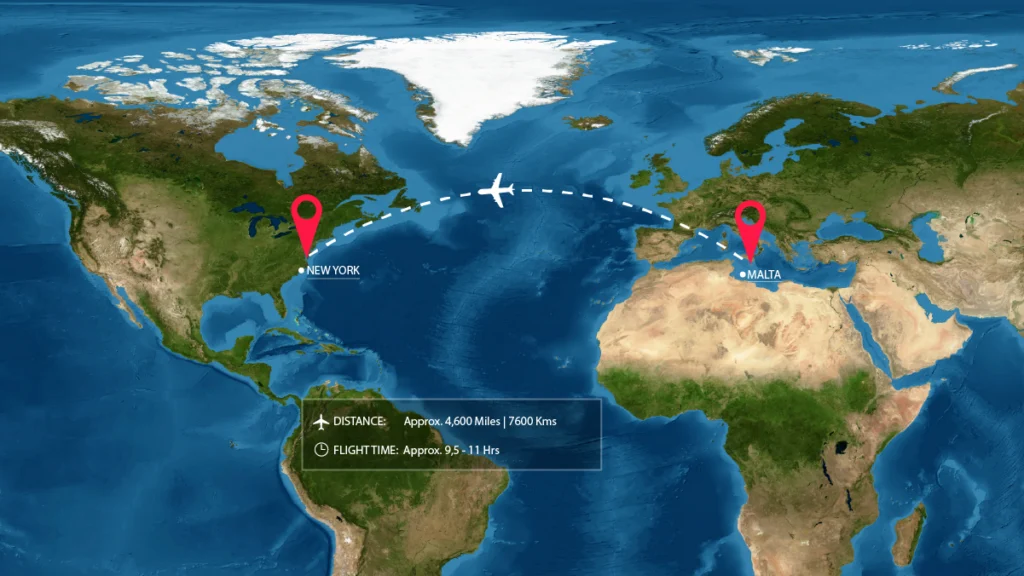
The launch of Delta Air Lines’ first non-stop service between New York’s John F. Kennedy International Airport and Malta represents far more than an aviation milestone. From a legal and international business perspective, improved transatlantic connectivity is likely to facilitate foreign direct investment, cross-border transactions, executive mobility and the practical delivery of legal and professional services between Malta and the United States.
When Delta Air Lines’ inaugural flight touched down in Malta on 7 June 2026, it marked the beginning of the first scheduled non-stop air service between Malta and North America. The arrival of Delta’s Boeing 767-300ER was welcomed by Malta International Airport as a significant enhancement to Malta’s international connectivity, creating a new transatlantic gateway for business, investment and leisure travel.
For decades, travelling between the United States and Malta typically required a connection through London, Frankfurt, Paris, Amsterdam or another European gateway. The new service removes one of the last practical barriers separating Malta from one of the world’s largest sources of entrepreneurship, investment capital and private wealth.
While the launch has naturally generated considerable interest within the tourism sector, its longer-term significance extends well beyond leisure travel. For internationally active families and businesses, direct connectivity is increasingly part of the infrastructure that supports cross-border investment and mobility.
Why the Delta New York–Malta Flight Matters for American Investors
The new Delta service links Malta directly with New York, one of the world’s foremost financial, legal and entrepreneurial centres. From JFK, travellers benefit from extensive onward connections throughout North America, making Malta significantly more accessible for business leaders, investors, family offices and professional advisers.
Delta had earlier confirmed Malta as one of its newest Mediterranean destinations in its official route announcement, while international aviation publication AirportRoutes recorded the commencement of the New York JFK–Malta service as an important development in transatlantic aviation.
The route arrives at a time when Malta is strengthening its position as a jurisdiction for international private wealth, innovation, financial services and cross-border business. Improved accessibility reinforces these ambitions by making the island easier to visit, assess and integrate into long-term international strategies.
As Dr Jean-Philippe Chetcuti, Senior Partner at Chetcuti Cauchi Advocates, Head of the firm’s US–Malta Desk and Dual Citizenship Practice, comments:
“Over the past two decades we have seen that international investment follows accessibility almost as readily as favourable legislation. When a jurisdiction becomes easier to reach, entrepreneurs visit more frequently, investors undertake more due diligence, families become more confident about relocation and professional relationships deepen. Direct connectivity therefore becomes an important indicator of a jurisdiction’s long-term competitiveness.”
How Direct Flights Influence American Investment Decisions
History consistently demonstrates that improved air connectivity influences investment behaviour.
International entrepreneurs rarely choose jurisdictions based solely on tax legislation or regulatory frameworks. Accessibility plays an equally important role. Decision-makers need destinations that can be reached efficiently for board meetings, legal consultations, property acquisitions, residency appointments and family visits.
While tourists naturally value the convenience of avoiding a European connection, internationally mobile entrepreneurs and investors stand to benefit even more. Reduced travel friction makes it easier to undertake due diligence, meet advisers, inspect investment opportunities and manage European operations from the United States.
As global mobility becomes increasingly strategic, accessibility itself has become an important competitive advantage for internationally connected jurisdictions.
A Route Responding to American and Maltese Demand
The success of a long-haul route is not measured solely by its inaugural flight. Early reports surrounding Delta’s launch indicated strong booking levels from both sides of the Atlantic, reflecting genuine market demand rather than speculative capacity.
This suggests that the service is responding to existing commercial and personal demand. Increased passenger flows typically lead to stronger business relationships, greater investment activity and deeper professional connections between the two markets.
For Malta, the route may facilitate wider economic engagement with North America, particularly in sectors where cross-border mobility plays an important role.
Why Malta Is Becoming Increasingly Relevant to American Private Clients
American entrepreneurs and internationally mobile families are increasingly exploring Europe for business expansion, residence planning, wealth preservation and succession purposes.
Malta offers a distinctive combination of European Union membership, English-speaking institutions, political stability, a sophisticated professional services ecosystem and an attractive Mediterranean lifestyle, qualities that continue to attract American entrepreneurs and internationally mobile families seeking a European base.
These characteristics have positioned Malta as an increasingly relevant jurisdiction for founders, family businesses, investors and family offices seeking a European platform from which to access European markets.
For exceptional individuals considering establishing deeper ties with Malta, the country’s evolving Citizenship by Merit framework provides an important legal pathway for those whose achievements, innovation or contribution align with Malta’s long-term national interests.
Legal Implications of Improved Connectivity
While the introduction of a direct air route creates no legal rights in itself, improved connectivity frequently influences the practical implementation of cross-border legal planning.
More frequent travel may facilitate corporate establishment, property transactions, residence and citizenship procedures, regulatory meetings, succession planning, family office governance and the delivery of legal and professional advisory services requiring in-person engagement.
For internationally active families and businesses, accessibility is therefore increasingly becoming an enabling factor in implementing cross-border legal, tax and wealth planning strategies.
What the Delta Route Means for American Family Offices
Much of the initial attention surrounding the Delta route has understandably focused on tourism. However, direct air links have historically become conduits for much broader economic activity.
They facilitate foreign direct investment, cross-border entrepreneurship, family office operations, professional advisory services, academic collaboration, executive mobility and international property investment.
Malta has increasingly positioned itself to attract entrepreneurs, innovators, investors and globally mobile families whose engagement with the jurisdiction extends far beyond leisure travel. Improved connectivity strengthens that proposition.
How the New Route Supports Malta’s Appeal to Americans
The timing of Delta’s arrival is significant.
Malta is actively positioning itself as a destination for innovation, advanced technologies, financial services, family offices and high-value foreign direct investment under Malta Vision 2050. Improved transatlantic connectivity provides an important piece of enabling infrastructure for these ambitions, making it easier for investors, founders and international advisers to engage directly with the jurisdiction.
Viewed in this context, the New York–Malta route represents more than an aviation development. It supports Malta’s broader economic strategy by strengthening connections with one of the world’s largest sources of entrepreneurship, investment capital and private wealth.
Practical Implications for American Businesses, Investors and International Families
Airlines rarely establish long-haul routes in isolation. New services both reflect existing demand and create new opportunities for trade, investment and professional collaboration.
Delta’s direct connection between New York and Malta signals growing confidence in Malta’s international profile and reinforces the island’s position as an increasingly accessible gateway to Europe.
For globally active entrepreneurs, family offices and internationally mobile families, Malta is no longer simply a Mediterranean destination. It is becoming a practical European platform from which to invest, establish businesses, protect wealth and build long-term international strategies.
The new air bridge across the Atlantic is therefore more than a flight schedule. It is another indicator that Malta’s role within the global mobility, private wealth and international business landscape continues to evolve. As connectivity improves, Malta is well placed to deepen its commercial, investment and professional ties with the United States, creating new opportunities for globally active businesses and internationally mobile families on both sides of the Atlantic.
The legal and commercial implications discussed in this article will naturally vary according to the circumstances of each investment, relocation or cross-border project.
RELATED ARTICLES
Malta 15% Tax Programmes Reform and the 2027 Individual Tax Programme

Malta Founder Relocation and Global Asset Structuring: Beyond Immigration Planning

Vantive Malta MedTech Investment

Malta’s Growing Appeal to Americans: Business, Lifestyle and European Access

Why Indians Are Choosing Malta Over Other European Golden Visa Programs

Malta Digital Nomad Visa