
Malta Residence and Tax Planning for Non-European HNWIs

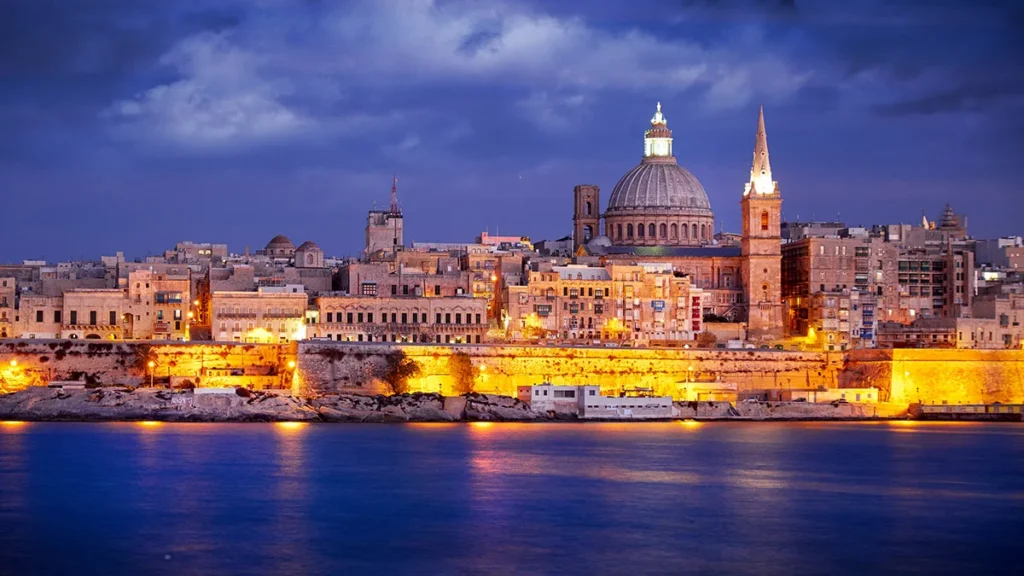
How Malta’s resident non-dom tax system, special tax programmes, permanent residence and family-office framework support internationally mobile HNW families.
At a Glance
Malta offers high-net-worth individuals and families from outside the European Union, European Economic Area and Switzerland several legally distinct ways to establish residence, organise their tax affairs and create a longer-term European base.
The appropriate strategy does not begin and end with selecting a residence programme. It requires coordinated consideration of immigration status, Maltese tax residence, domicile, foreign-income remittances, treaty exposure, family composition, property occupation and the location of business, investment and succession structures.
Malta’s resident non-domiciled tax system provides the foundational tax framework for many internationally mobile residents. The Global Residence Programme and, from 1 January 2027, the Individual Tax Programme provide special tax status. The Malta Permanent Residence Programme instead provides permanent immigration status and does not automatically determine the holder’s tax treatment.
HNW families establishing a substantive investment, governance or wealth-management presence may also consider Malta’s family-office framework. Citizenship by merit remains legally separate and is reserved for individuals capable of demonstrating exceptional service, contribution or national interest.
Legal Takeaways
- Immigration residence, tax residence, treaty residence, domicile and citizenship are separate legal concepts.
- Malta’s resident non-dom rules may apply independently of GRP or MPRP status where the relevant residence and domicile conditions are satisfied.
- The GRP remains the principal special tax-status framework for qualifying non-EU, non-EEA and non-Swiss nationals during the 2026 transitional period.
- The Residence Programme applies to EU, EEA and Swiss nationals and is not the equivalent route for a non-EU principal applicant.
- From 1 January 2027, the Individual Tax Programme will consolidate Malta’s four principal special tax programmes while retaining distinct beneficiary categories.
- MPRP provides permanent immigration status but is not itself a preferential tax regime.
- HNW families may combine Maltese companies, trusts, investment vehicles, succession structures and family-office arrangements with an appropriate residence strategy.
- Citizenship by merit is discretionary and must not be presented as an investment route or automatic progression from Maltese residence.
Residence and Tax Are Separate
A residence permit determines whether an individual may lawfully live in Malta. Tax residence determines the extent to which Malta may tax that individual. Domicile affects the basis on which certain residents are taxed, while citizenship determines nationality.
These concepts can interact, but they do not merge into one legal status.
Residence is a question of fact rather than nationality or civil status. An individual present in Malta for more than 183 days in a calendar year will generally be tax resident for that year. An individual who moves to Malta with the intention of establishing residence may, however, become resident from the date of arrival even without reaching 183 days during the first year.
An HNWI can consequently:
- hold Maltese immigration status without becoming Maltese tax resident;
- become Maltese tax resident without holding special tax status;
- be regarded as tax resident in Malta and another jurisdiction simultaneously; or
- become subject to a double-tax treaty tie-breaker analysis.
These issues should be addressed before relocation. The analysis becomes particularly important where the individual or family retains homes, businesses, trusts, foundations, investment portfolios, executive positions or substantial personal connections outside Malta.
Departure-country tax rules must also be considered. A Maltese residence strategy cannot, by itself, terminate tax residence elsewhere or prevent the application of exit taxes, deemed disposals or continuing residence rules in the jurisdiction of origin.
“For an HNW family, the first mistake is often to treat residence, tax residence and citizenship as one question. Each has different legal tests and consequences. A credible relocation plan should establish where the family will lawfully reside, where each member will be tax resident and how their wider business and wealth structures will be affected.”
Dr Jean-Philippe Chetcuti
Senior Partner, Citizenship, Residency and Private Client Tax
Chetcuti Cauchi Advocates
Malta’s Resident Non-Dom Foundation
Malta’s resident non-domiciled tax system is not a residence programme. It is a basis of taxation arising under Malta’s general income-tax framework.
An individual who is resident in Malta but is not domiciled or ordinarily resident there may be taxed on the remittance basis. Under the Malta Res Non-Dom Tax Guide:
- Malta-source income is taxable whether or not it is received in Malta;
- foreign-source income is taxable only if and to the extent that it is received in Malta; and
- foreign capital gains are generally not subject to Maltese tax even where the proceeds are received in Malta.
Certain non-domiciled individuals are subject to a minimum annual Maltese tax of €5,000 where their foreign income reaches the statutory threshold. Exceptions apply to beneficiaries of specified special tax regimes.
For HNWIs, the practical outcome depends heavily on the character, source and movement of funds. A transfer from an established overseas bank or investment account is not automatically treated as capital merely because the account predates the move to Malta.
The individual should be able to distinguish between:
- current-year foreign income;
- accumulated income from earlier years;
- capital gains and sale proceeds;
- original investment capital;
- shareholder or third-party loans;
- gifts and inheritances; and
- trust or foundation distributions.
Reliable banking records, transactional evidence and properly segregated accounts may therefore be central to remittance planning.
Ordinary resident non-dom treatment may be more proportionate than special tax status where the individual expects to remit limited foreign income. Conversely, an HNWI remitting substantial recurring income may prefer the rate certainty and formal framework associated with GRP or, from 2027, the Individual Tax Programme.
“The correct comparison is not simply the 15% special rate against Malta’s progressive tax rates. The family’s income profile, anticipated remittances, foreign tax credits, Malta-source income, investment disposals and the evidential classification of capital all need to be modelled.”
Magdalena Velkovska
Director, Private Client Tax
Chetcuti Cauchi Advocates
GRP for Non-EU HNWIs
The Global Residence Programme is currently designed for individuals who are not nationals of the EU, EEA or Switzerland and who are not long-term residents.
Under the Global Residence Programme guidelines, qualifying beneficiaries may obtain special tax status under which qualifying foreign-source income received in Malta is taxed at 15%, subject to the applicable conditions and minimum annual tax.
The GRP is therefore relevant to an HNWI who:
- intends to establish a genuine residential base in Malta;
- expects to receive substantial foreign income in Malta;
- values a defined special tax-status framework;
- can satisfy the qualifying property and other programme conditions; and
- is prepared to maintain ongoing compliance with the programme requirements.
GRP status should not be evaluated solely by reference to the headline rate. The family’s expected remittances, foreign tax suffered, Malta-source income, dependant structure and intended duration of residence must also be considered.
The programme must also be distinguished from MPRP. GRP provides special tax status and the related residence documentation. MPRP provides permanent immigration status. One is not a substitute for the other.
Why TRP Does Not Apply
The Residence Programme applies to nationals of the EU, EEA and Switzerland.
It should not be presented as an alternative route for a non-EU principal applicant. Its relevance to this publication is comparative and transitional: it forms part of the existing special-tax-programme architecture that will be consolidated under the Individual Tax Programme.
This distinction is important for HNW families with mixed nationalities. Different family members may have different immigration and tax-status options depending on their nationality, relationship to the principal applicant and individual residence position.
The Individual Tax Programme From 2027
The Individual Tax Programme Rules, 2026 come into force on 1 January 2027. The rules consolidate:
- the Global Residence Programme;
- The Residence Programme;
- the Malta Retirement Programme; and
- the United Nations Pensioners Programme.
The Individual Tax Programme Rules retain distinct categories, including global resident status and EU, EEA and Swiss resident status. The reform therefore creates a consolidated legislative framework without treating all beneficiaries as one homogeneous class.
The new programme retains 15% taxation for qualifying foreign income received in Malta while introducing higher economic and residential thresholds and a renewable five-year status.
Existing beneficiaries and individuals granted qualifying status by the end of 2026 benefit from transitional treatment until 31 December 2031, subject to the applicable legal provisions.
For a non-EU HNWI considering Malta during 2026, the strategic questions include:
- whether an application should be made under the existing GRP framework;
- whether the individual expects to satisfy the enhanced ITP requirements from 2027;
- whether ordinary resident non-dom treatment would be more proportionate;
- how long the family intends to maintain Malta as a principal or secondary residence; and
- which immigration basis will support each family member independently of their tax status.
The detailed reform is considered separately in Legal-Malta’s analysis of Malta’s 2027 Individual Tax Programme.
MPRP Permanent Residence
The Malta Permanent Residence Programme is an immigration framework for nationals of countries outside the EU, EEA and Switzerland.
It provides permanent residence following investment in qualifying property, payment of the applicable government contribution and administrative fee, a qualifying donation and successful due diligence. Applications must be submitted through a licensed residence agent under the MPRP legal framework.
MPRP can be strategically relevant to HNW families seeking:
- permanent residence status rather than a renewable temporary permit;
- long-term immigration continuity in Malta;
- inclusion of qualifying multi-generational dependants;
- a European residential base without an automatic minimum-stay requirement; or
- separation between immigration security and annual tax-residence decisions.
MPRP, GRP and resident non-dom taxation serve different legal purposes:
- MPRP provides permanent immigration status.
- GRP and ITP provide special tax status and support the corresponding residence documentation.
- Resident non-dom taxation arises under Malta’s general income-tax framework where its conditions are satisfied.
An MPRP beneficiary does not become Maltese tax resident merely because permanent residence has been granted. Tax residence depends on the individual’s physical presence, intention, habitual residence, personal ties and economic circumstances.
The programme may be particularly relevant to multi-generational HNW families because the MPRP Regulations allow the inclusion of qualifying adult children and dependent parents or grandparents, subject to the statutory conditions.
A family may therefore use MPRP to secure long-term immigration status while separately assessing whether ordinary resident non-dom taxation, GRP or the ITP is suitable for those members who become Maltese tax resident.
Malta as a Family Office Jurisdiction
For an HNW or UHNW family, relocation may form part of a wider decision concerning investment governance, asset ownership, succession, philanthropy and the administration of cross-border wealth.
Malta’s Single Family Office Framework describes a family office as a structure managing a family’s financial and personal affairs, including the preservation, growth and intergenerational transfer of wealth.
Depending on its activities, a Malta family-office architecture may include:
- family holding or investment companies;
- trusts or private foundations;
- registered trustees of family trusts;
- investment vehicles;
- special-purpose entities;
- operating and intellectual-property companies;
- philanthropic structures; or
- a Notified Professional Investor Fund.
Malta’s regulatory framework includes specific treatment for family-office NPIFs and qualifying self-managed NPIF structures. These options may be relevant where the family requires a more formal investment platform, although the correct structure will depend on the nature of the assets, investor base, regulatory perimeter and governance model.
A dedicated residence framework for family offices is also available to qualifying ultimate beneficial owners, senior employees and dependants connected with relevant MFSA-authorised entities.
The residence permits are granted for three years and may be renewed. They permit qualifying holders to live and work in Malta and undertake short-stay travel within the Schengen Area, subject to immigration, regulatory and due-diligence requirements.
The establishment of a family office should not be treated merely as a means of obtaining residence. A credible structure requires genuine functions, appropriate governance, decision-making capacity and substance proportionate to the family’s assets and activities.
“Malta’s family-office proposition is strongest when residence, ownership, investment governance, succession and operational substance are designed together. Companies, trusts, funds and residence provisions are building blocks. They must be assembled around the family’s actual decision-making and generational objectives.”
Dr Priscilla Mifsud Parker
Senior Partner, Tax, Family Office and Immigration
Chetcuti Cauchi Advocates
Citizenship Framework for HWNIs
The Citizenship by Merit pathway for non-European HNWIs is legally separate from residence and tax planning. Acquiring Maltese Citizenship does not of itself change the taxation of foreigners in Malta but may require advance tax planning to avoid unintended consequences: Refer to this guide on Malta Citizenship Tax Implications Explained.
Citizenship by merit is not a programme, scheme, pathway, continuation or alternative to Malta’s former citizenship-by-investment framework. Decisions remain discretionary and are assessed individually.
Under the current framework, an individual who renders exceptional service to Malta or humanity, makes an exceptional contribution, or is of exceptional interest to Malta may be considered for naturalisation on the basis of merit.
Relevant fields may include:
- science and research;
- technology and innovation;
- entrepreneurship and job creation;
- sport;
- culture and the arts;
- medicine;
- education; and
- philanthropy.
The Citizenship-by-Merit guidance provides that, following approval in principle, the formal application stage requires evidence including at least eight months of Maltese residence, adequate residential property, knowledge of Maltese or English and the exceptional service, contribution or interest relied upon.
For an accomplished entrepreneur, scientist, philanthropist, artist, athlete or technologist relocating to Malta, participation in Maltese economic, cultural or social life may create the circumstances in which a genuine contribution develops into recognition through citizenship of the Republic of Malta, a full EU member state.
Choosing the Appropriate Framework
A Malta strategy for an HNW family should normally be developed in the following sequence.
First, establish the immigration requirements. The nationality, relationship, age, dependency, employment plans and intended residence pattern of each family member should be assessed.
Second, determine when Maltese tax residence may arise. This requires a factual review of physical presence, intention, homes, family location, executive functions, investment activity and possible dual residence.
Third, review the departure jurisdiction. Exit taxes, continuing residence rules, trust migration, corporate-management issues and reporting obligations may need to be addressed before the family relocates.
Fourth, compare ordinary resident non-dom taxation with special tax status. Expected foreign income, remittances, Malta-source income, capital gains, foreign tax credits and minimum tax should be modelled.
Fifth, decide whether permanent residence is required. MPRP may offer immigration continuity to families that value indefinite status independently of their annual tax position.
Sixth, coordinate the wider wealth architecture. Companies, trusts, foundations, investment funds, property, family governance, succession and philanthropy should be reviewed alongside the move.
Finally, keep citizenship legally separate. Citizenship by merit is relevant only where an individual can present an exceptional case based on genuine service, contribution or national interest.
The strongest Malta strategy is therefore rarely a single programme application. It is a coordinated immigration, tax and private-wealth plan built around the family’s actual life, assets and long-term objectives.
Malta HNWI Residence FAQs
Does MPRP make an HNWI tax resident in Malta?
No. MPRP grants permanent immigration status. Maltese tax residence depends on physical presence, intention, habitual residence and the individual’s wider personal and economic connections with Malta.
Can an MPRP holder use resident non-dom taxation?
Potentially, yes. Where the individual becomes Maltese tax resident and remains non-domiciled, the remittance basis may apply, subject to the Income Tax Act, minimum-tax provisions and the individual’s precise circumstances.
Is GRP restricted to HNWIs?
GRP is not defined solely by an HNWI label. Applicants must satisfy its statutory eligibility, property, resource, insurance and compliance conditions. It is nevertheless particularly relevant to internationally mobile HNWIs remitting foreign income to Malta.
Is GRP still available before the ITP begins?
GRP remains the existing special tax-status framework for qualifying non-EU, non-EEA and non-Swiss nationals during 2026. The Individual Tax Programme comes into force on 1 January 2027, subject to the applicable transitional provisions.
Can a non-EU HNWI apply under The Residence Programme?
No. The Residence Programme is intended for EU, EEA and Swiss nationals. The current corresponding special tax framework for other nationalities is the Global Residence Programme.
Can an HNWI combine MPRP with GRP?
Potentially, but the legal and practical interaction must be reviewed carefully. MPRP addresses permanent immigration status, while GRP addresses special tax status. Separate conditions, documentation and continuing obligations apply.
Can a family office provide residence in Malta?
A dedicated three-year renewable residence route is available to qualifying ultimate beneficial owners, senior employees and dependants connected with relevant MFSA-authorised family-office structures.
Does long-term Maltese residence guarantee citizenship?
No. Residence does not guarantee Maltese citizenship. Naturalisation remains subject to the applicable law and ministerial discretion. Citizenship by merit is reserved for cases involving exceptional service, contribution or interest.
Maltese Private Client Experts Consulted
Dr Jean-Philippe Chetcuti is Senior Partner in citizenship, residency and private client tax at Chetcuti Cauchi Advocates. His work focuses on the interaction between lawful residence, tax residence, citizenship law and the longer-term planning requirements of internationally mobile HNW and UHNW families.
Magdalena Velkovska is Director in Private Client Tax at Chetcuti Cauchi Advocates. She advises international individuals and families on Maltese tax residence, resident non-dom taxation, special tax status, remittance planning and pre-relocation tax structuring.
Dr Priscilla Mifsud Parker is Senior Partner in tax, family-office and immigration matters at Chetcuti Cauchi Advocates. She advises private families and family offices on ownership structures, trusts, governance, succession, regulated investment arrangements and Malta-based family-office operations.
Key Firm in Maltese Private Client Law
Chetcuti Cauchi Advocates is a Malta-led international law firm advising HNW and UHNW individuals, families, entrepreneurs and family offices on Maltese immigration, tax residence, resident non-dom taxation, wealth structuring, family governance, succession, trusts, corporate structures and citizenship law.
Its private-client practice combines immigration, tax and family-wealth advice so that Maltese residence status, tax treatment and underlying ownership structures can be reviewed as one coordinated cross-border mandate.
RELATED ARTICLES
Malta 15% Tax Programmes Reform and the 2027 Individual Tax Programme
Malta Founder Relocation and Global Asset Structuring: Beyond Immigration Planning

Vantive Malta MedTech Investment

Malta’s Growing Appeal to Americans: Business, Lifestyle and European Access

Why Indians Are Choosing Malta Over Other European Golden Visa Programs
Malta Digital Nomad Visa