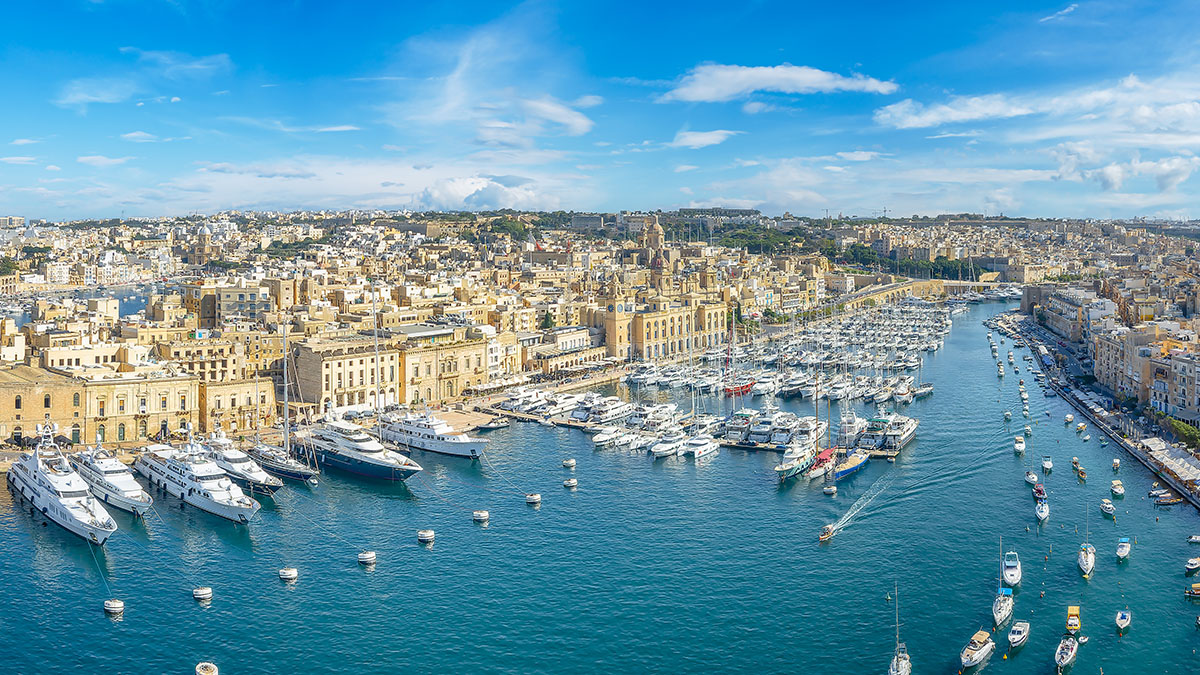
Malta Property Buy-to-Let Investments

Rental property market in Malta
Now that people are seeing the light at the end of the tunnel of the global economic crisis, many are the persons on the lookout for a place where to safely protect their assets. Among the most popular solutions in this respect is to buy property in Malta with the specific intention of leasing it out for long or short terms and live off, wholly or partly, on the income generated from such. There exists a very healthy local rental market in Malta, and thus the prospect of deriving an economic advantage out of such transaction is very tangible.
Why Malta?
Malta is situated in the middle of the Mediterranean and as such enjoys an enviable climate. Property prices in Malta are very stable, and notwithstanding the fact that the value of certain properties has slightly decreased during the financial crisis, most of the properties have regained their pre-crisis values in the past few months. Malta’s economy and good healthcare are on top of the local political agenda, and foreigners who choose to make Malta their home will find Malta to be well-equipped with the facilities to allow anyone to enjoy a very high standard of living. The fact that nearly all of the persons on the island are bi-lingual makes communication very easy, and business is facilitated through the EURO and the excellent network to other countries that is provided by the local airport facilities.
Through its various residence schemes, and the fact that no permits are required when buying certain types of immovable property in Malta (especially in Special Designated Areas), Malta has become very successful in attracting high net worth individuals who would want to move to Malta and take up residence here. In fact, apart from being very prestigious prime locations, there is the possibility that a foreigner invests in more than one property located in a Special Designated Area, meaning that the potential for leasing out such properties for an economic advantage can be multiplied.
Buying property in Malta
Foreigners on the lookout for a property in Malta are very likely to be spoilt for choice. In fact, the Maltese property market can offer a very wide range of properties, including apartments, villas, townhouses, houses of character, bungalows, resort-style developments, etc.
The ‘konvenju’
As soon as a property has been chosen and the price has been agreed upon with the seller, the parties are required to enter into a Promise of Sale Agreement, commonly known as a konvenju. This is a very important document whereby the parties agree on a set of terms and conditions that will eventually govern the transaction. This agreement has to be done in writing, and although this is not required at law, it is highly recommended that such private document is drawn up before a notary public. The notary public is an independent professional and he has a duty to remain impartial – as opposed to lawyers, whose role is to protect the best interests of their clients in the transaction.
On the signature of the konvenju, a provision duty of 1% of the purchase price is to be paid to the Inland Revenue Department by the prospective purchaser, and the agreement is registered accordingly – unless this is done within a period of 21 days, then the konvenju loses all its effects. Customarily, a deposit of 10% of the purchase price is paid to the seller, although such rate can be lower or higher depending on what would have been negotiated. In order to ensure the rights of both parties, the deposit is normally held by the notary public as a sort of escrow.
During the term of operation of the promise of sale agreement (usually three months), the lawyers of the prospective purchaser as well as the notary public vet the root of the seller’s title in the property. This procedure is necessary in order to ensure that the purchaser will obtain a sound title to the property as soon as the process has been finalised. The term of the promise of sale agreement can also used by the prospective purchaser to engage an architect who will ensure that the property has been built up as shown in the plans, and in accordance with the relevant permits. The purchaser also has the possibility of obtaining a bank loan (if needed) in order to finance the acquisition – there is quite a wide choice of credit institutions which offer loans to prospective purchasers at different pay-back periods, interest rates and upfront contribution percentages. The actual terms and conditions would much depend on the financial standing of the prospective purchaser.
The final deed of sale
Before the expiry of the konvenju, and on the conditions listed in the promise of sale agreement having been fulfilled, the parties can enter into the final deed of sale. This has to be signed before a notary public ad validitatem, and the remaining part of the purchase price and the balance of the stamp duty (usually 5% of the value of the property, but it can be lower in certain cases) is paid accordingly. Following publication of the deed of sale, the same is registered by the notary public at the Public Registry, or the Land Registry as applicable.
Renting property in Malta
The lease agreement
Once the property has been bought, its owner can lease it out to third parties. A lease agreement has to be done in writing, but there is no need for a public deed to be drawn up – in fact, leases are only rarely drawn up before a notary public. In order for it to be valid, the lease agreement is required to include clauses relating to the property to be leased, the agreed use of the property let, the duration of the lease agreement, whether the lease may be extended and in what manner, the amount of rent to be paid as well as the manner in which rent will be paid. If any one of these items is missing from the lease agreement, then this will be null and void, meaning that it will have no legal validity. It is also important to note that the law imposes no restriction whatsoever on the amount of rent chargeable – the parties are free to agree on the quantum payable as they deem fit.
The inventory and the obligations of the parties
In those cases where the property being rented out is furnished, it is very highly recommended that an inventory is drawn up – ideally, the list provides information on both the items present in the property as well as their condition. Such inventory should be signed by both parties in order to avoid any future contentions as to whether a particular item was leased out together with the property as well as in cases where certain items are not returned to the owner in the same condition in which they were rented out (obviously, fair wear and tear is accepted). Unless the condition of the items (and even of the property itself) is stated in the lease agreement, it is presumed that these have been delivered in good condition.
The lessor is obliged to deliver the property in good condition and carry out all structural repairs which may become necessary from time to time e.g. repairs in relation to to the structure of the building and the ceilings. Obviously, the parties are always free to agree otherwise in the lease agreement.
On the other hand, the lessee is bound to take care of the property, use it for the purposes for which it has been leased, and to deliver it back at the end of the lease in the same condition. He must also carry out those non-structural repairs which become necessary. Obviously, fair wear and tear is accepted. If the lessee is negligent and fails to care for the property as if it were his own, he will be liable to pay for the damages that ensue. If the breach of the lessee’s obligations is serious enough, this may even warrant the dissolution of the lease agreement.
Termination of the lease agreement
A lease agreement does not pass any ownership rights to the lessee, meaning that the lessor remains the owner of the property. Moreover, and in order to live up to the legitimate expectations of the parties to the transaction, Maltese law stipulates that the lease is not dissolved by the death of either of the lessor or of the lessee. This would mean that the rights and obligations of the deceased party are automatically passed on to the heirs.
Under Maltese law, it is impossible for a lease agreement to be tacitly renewed. This means that when the stated term of the lease expires, the lease agreement expires automatically, and no further formalities need to be undertaken.
RELATED ARTICLES
Pitfalls of Buying Property in Malta: A Legal Guide for Foreign Buyers
Taking Up Residence or Citizenship in Malta: A Practical Tax Guide

Malta Citizenship FRAMEWORK

Maltese Citizenship by Merit
Malta: A Prime Family Office Location for Wealth Advisors

The Times: “Forget Dubai — Britons Are Moving Here to Cut Tax Bills Instead”